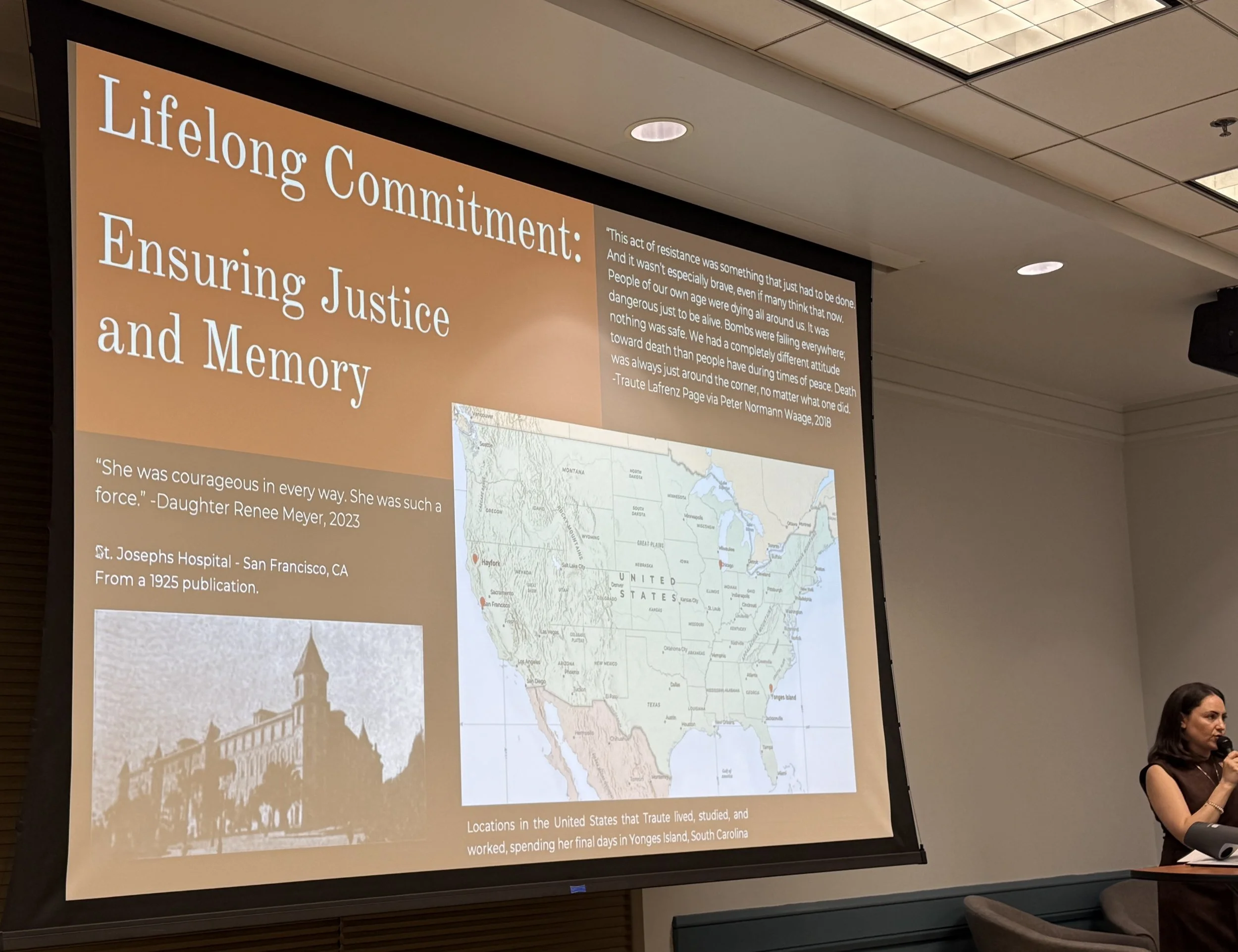
Virginia Holocaust Museum
In addition to teaching during the academic year, every summer I am a primary instructor and course designer for the Virginia Holocaust Museum’s Alexander Lebenstein Teacher Education Institute.
In this role, I teach courses on the topic of Holocaust and genocide studies to educators throughout Virginia and the surrounding states. Topics include: Jewish responses to Nazi persecution, gendered persecution during the Holocaust, teaching the Holocaust with film and diaries, and rescue and resistance during the Holocaust. Please review a full list of my various course offerings:
-
In this mini-course, I specialize in illuminating the diverse ways Jewish communities responded to Nazi persecution, emphasizing cultural resilience, spiritual creativity, and the many forms of agency that challenge one-dimensional narratives of victimhood.
-
This course highlights the full spectrum of resistance—armed, cultural, and spiritual—as well as rescue efforts across Europe, helping educators recognize how defiance and solidarity shaped Jewish and non-Jewish experiences under Nazism.
-
I bring experience integrating graphic narratives into Holocaust education, using visual storytelling to deepen historical understanding, strengthen empathy, and support accessible, age-appropriate learning.
-
IIn this mini-course, I emphasize the power of youth diaries, including those collected in Salvaged Pages, to humanize history and foreground individual voices, guiding educators in using personal narratives to enrich classroom inquiry.
-
My teaching explores the complex political and logistical barriers that made escape from Nazi Europe so difficult, helping learners understand how borders, immigration policies, and international indifference shaped survival.
-
For this topic, I focus on revealing the many forms of collaboration and complicity that enabled the Holocaust—from bureaucratic cooperation to local participation—encouraging nuanced discussion about moral accountability and societal responsibility.
-
My instruction centers marginalized histories, including the persecution of LGBTQ+ individuals, highlighting legal repression, camp experiences, and the postwar silencing and recovery of these stories.
-
I bring a gender-focused lens to Holocaust education, analyzing how gender shaped vulnerability, violence, resistance, and daily life, and helping participants understand the distinct experiences of women and men.
-
Using The Zone of Interest as a case study, this session considers how film can evoke moral discomfort and illuminate the banality of evil. Participants will discuss classroom strategies for teaching the Holocaust through contemporary cinema, guiding educators in using film to provoke critical reflection and historical insight.
My work extends beyond teaching and research to active engagement with broader communities: I lead professional development workshops for educators, visit public and private school classrooms, and regularly offer content-specific workshops by invitation, while remaining open to developing more accessible online programming. I also bring extensive experience as a historical consultant for Holocaust museums, contributing to exhibitions, educational programming, and related initiatives. Through these efforts, I aim to foster critical understanding, historical responsibility, and meaningful engagement with the complexities of the Holocaust.
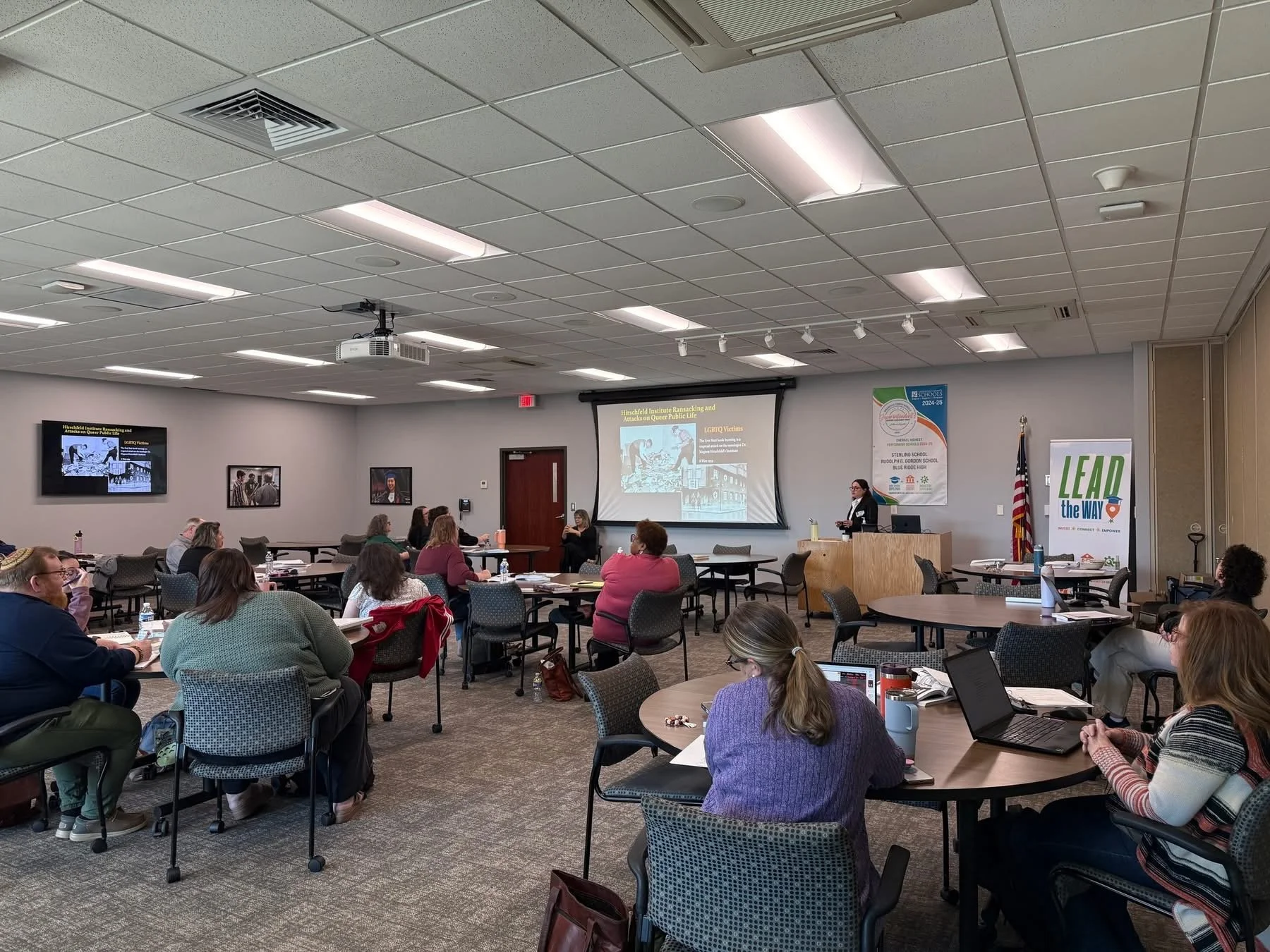
South Carolina Council on the Holocaust (SCCH)
I work closely with the South Carolina Council on the Holocaust, contributing to teacher education initiatives across the state. In this role, I lecture and lead sessions at professional development trainings for educators, supporting the teaching of Holocaust history in thoughtful and rigorous ways. I am also co-leading a summer study trip for South Carolina teachers through Columbia, Montgomery, Birmingham, and New Orleans, titled “Race and the Second World War,” which explores the intersections of race, conflict, and global history in the wartime era.