Teaching
I am committed to fostering critical engagement with primary sources, encouraging students to think historically and analytically about the past and its ongoing impact. Across all my courses, I aim to create inclusive, thought-provoking learning environments that invite collaboration and curiosity.
Texas A&M-San Antonio
College of Charleston
Fall 2025
Fall 2026
-
This course traces Jewish life from the 1492 expulsion of Sephardic Jews to today, examining how Jewish identity, culture, and community have evolved through moments of upheaval, innovation, and change. We explore shifting definitions of Jewish belonging, the impact of gender, diaspora, and diversity, and the roles of ritual, objects, and space in shaping Jewish life. Through close analysis of primary sources, students will engage with key questions about Jewish “groupness,” identity, and memory across time and place.
Spring 2026
-
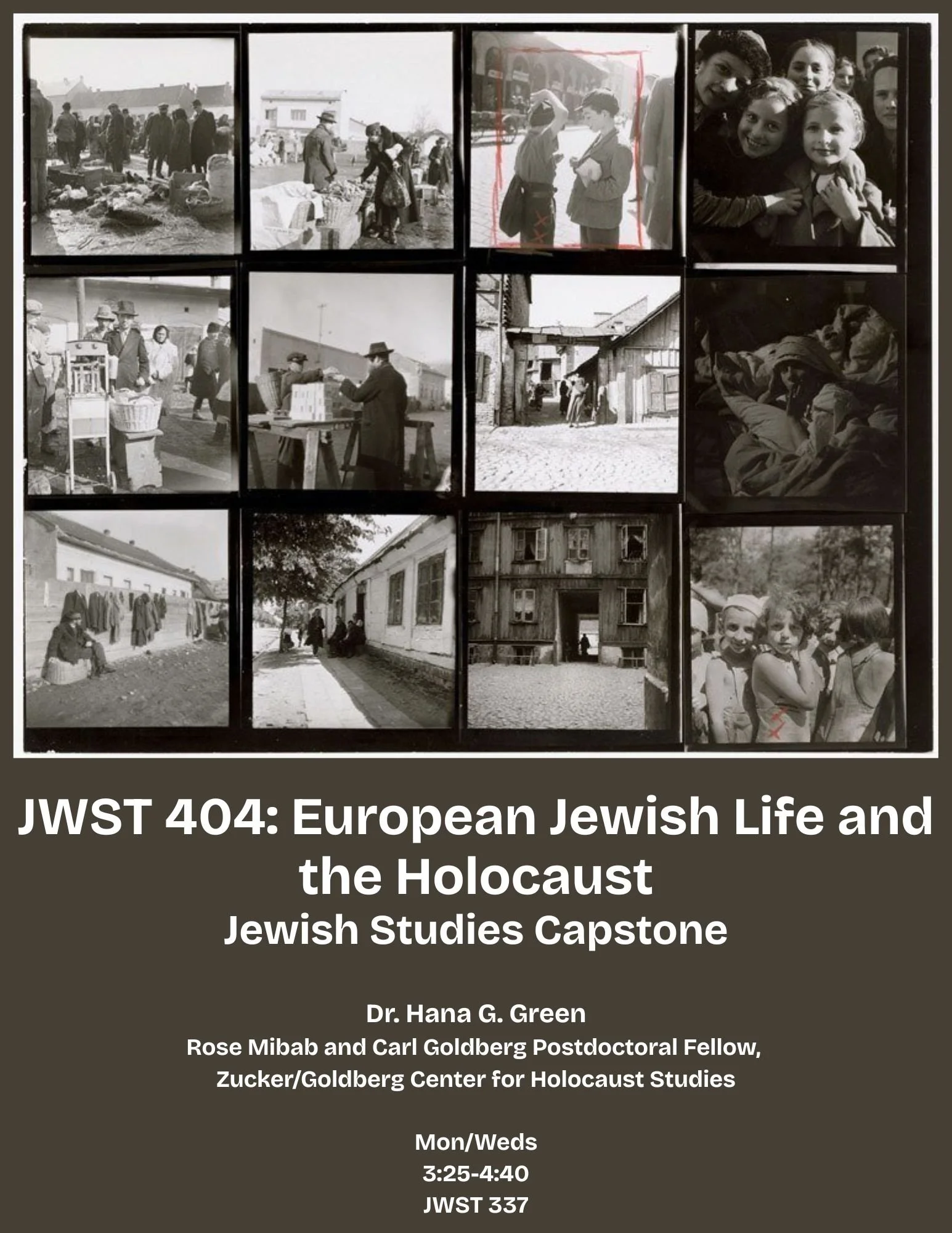
This capstone course explores the richness and complexity of European Jewish life before, during, and after the Holocaust. Through primary sources, scholarship, and student-led research, we examine how Jewish communities lived, resisted, adapted, and remembered in the face of catastrophe. The course emphasizes historical context, cultural continuity and rupture, and the ethical challenges of studying trauma and memory
-
This course examines how film and television shape public understanding of the Holocaust, asking what filmmakers choose to teach and why. Through analyzing works ranging from Nazi propaganda to Hollywood dramas and documentaries, we’ll explore the power, limitations, and responsibilities of screen portrayals of genocide.
-
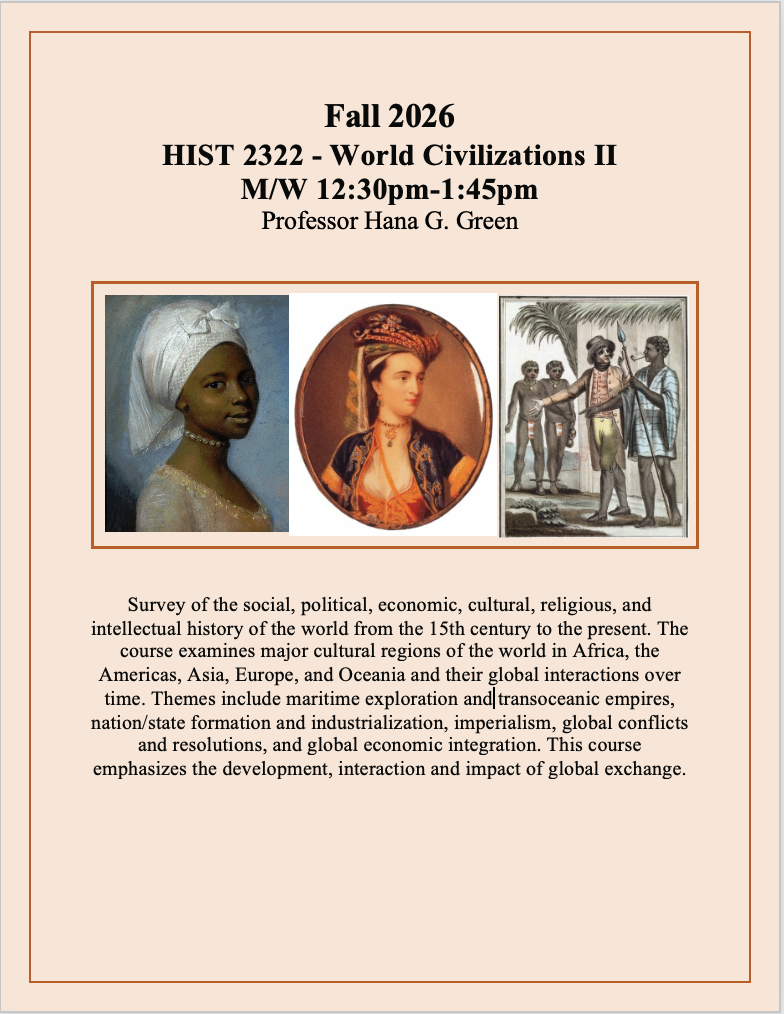
This course is a survey of the social, political, economic, cultural, religious, and intellectual history of the world from the 15th century to the present. The course examines major cultural regions of the world in Africa, the Americas, Asia, Europe, and Oceania and their global interactions over time. Themes include maritime exploration and transoceanic empires, nation/state formation and industrialization, imperialism, global conflicts and resolutions, and global economic integration.
-
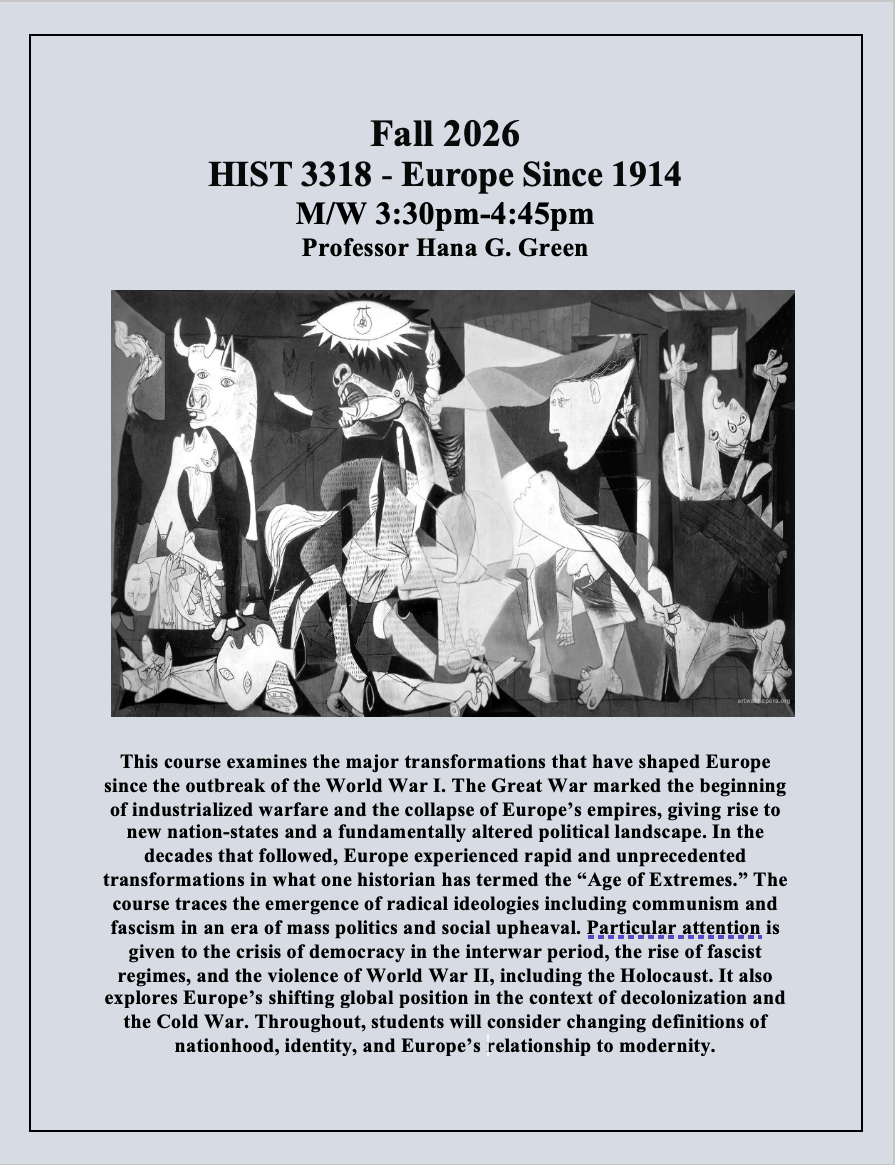
This course examines the major transformations that have shaped Europe since the outbreak of the World War I. The Great War marked the beginning of industrialized warfare and the collapse of Europe’s empires, giving rise to new nation-states and a fundamentally altered political landscape. In the decades that followed, Europe experienced rapid and unprecedented transformations in what one historian has termed the “Age of Extremes.” The course traces the emergence of radical ideologies including communism and fascism in an era of mass politics and social upheaval. Particular attention is given to the crisis of democracy in the interwar period, the rise of fascist regimes, and the violence of World War II, including the Holocaust. It also explores Europe’s shifting global position in the context of decolonization and the Cold War. Throughout, students will consider changing definitions of nationhood, identity, and Europe’s relationship to modernity.
